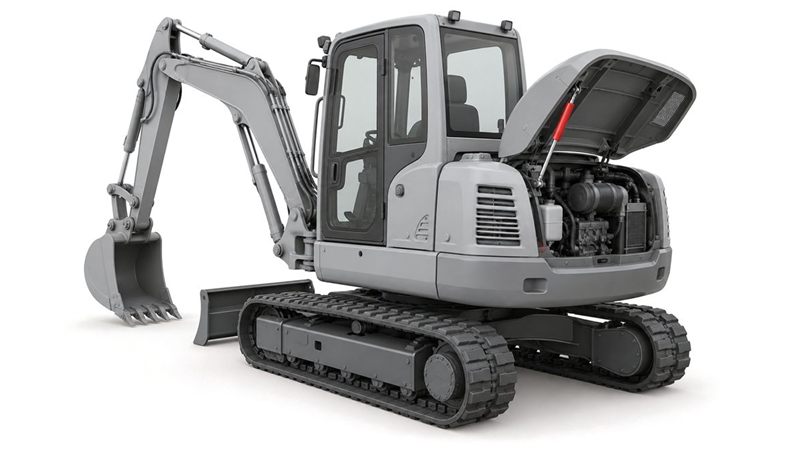
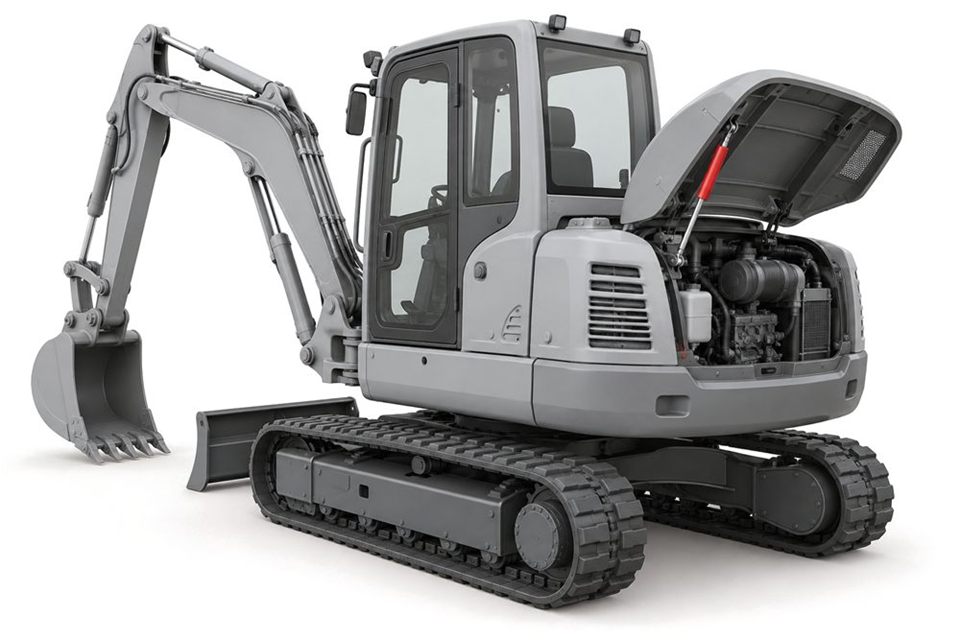
On tractors, harvesters, sprayers and compact excavators, gas springs lift engine hoods, hold cab doors and windows open, and support toolbox lids. They also face dust, mud, chemicals, pressure washers, vibration and wide temperature swings. This guide is for engineers and parts buyers who specify or stock them.
Typical positions and what to specify
The positions below are access parts. The hydraulic cylinders that move a boom or hitch are different components.
| Application | Typical concern | What to specify |
|---|---|---|
| Engine hoods and side panels on tractors, excavators and loaders | Weight, engine heat, mud, washdown | Force for hot and cold days, rod-down mounting, heat clearance |
| Cab doors | Wind, slopes | Hold-open force, metal end fittings, locking if needed |
| Rear windows and roof hatches | Glass weight, cold mornings | Margin for cold, locking for part-open positions |
| Toolboxes, battery boxes and service covers | Vibration, rough handling, road salt | Metal fittings with clips, corrosion protection |
| Harvester covers and shields | Dust, chaff, wide panels | Rod protection, two springs, a mechanical stay for service |
| Sprayer tank lids and lockers | Chemicals, daily washing | Stainless option, material stated for each component |
Start with the working environment
Machinery is hard on gas springs:
Dust and chaff stick to the thin oil film on the rod and wear the seal until it leaks gas. Keep the rod out of fan airflow and tire spray, or shield it.
Mud and washing. Dried mud scrapes the seal, and a pressure-washer jet aimed at it can force grit inside.
Sunlight. UV light slowly weakens plastic fittings and some coatings.
Vibration loosens joints and cracks weak brackets. See the fittings section.
Cold mornings and hot engine bays
A gas spring's force comes from nitrogen pressure acting on the rod, and gas pressure rises and falls with temperature. So a strut pushes less when cold and more when hot. Cold also thickens the oil inside and slows the movement. A hood that rises by itself in summer may need lifting by hand on a frosty morning.
Heat from the exhaust, or sun on a dark panel, does the opposite: the panel opens faster, is harder to close, and the seals age sooner. Give your supplier both temperature extremes and keep struts clear of hot parts.
Mount the rod pointing down
A gas spring contains a little oil, which collects at the lowest point. When the rod points down, this oil sits on the rod seal and lubricates it, so the seal keeps the gas in longer. In many designs the same oil also damps the end of the stroke. When the rod points up, the seal can run dry.
Aim for rod-down at least when the panel is closed, because the spring spends most of its life there. Mention any other orientation in your inquiry. Lockable gas springs can need a different orientation, so confirm it with your supplier before you design the brackets. Let both ends pivot freely, so the rod is never bent sideways. Use a mechanical stop at full opening, not the spring's own end of travel.
Size the force from weight, center of gravity and hinge geometry
Weight alone does not set the force. The spring must balance the panel's turning moment about the hinge: weight times the horizontal distance from the hinge to the center of gravity. The spring's moment is its force times its lever arm, the perpendicular distance from the hinge to the spring's line. Moving the panel mount toward the hinge usually shortens that arm and raises the required force sharply.
Force rises as the rod goes in, so a hood strut pushes hardest with the hood closed.
Add a modest safety margin for extra lights or glass, mud and cold-weather force loss.
Do not oversize. Too much force makes closing hard and overloads latches, hinges and brackets.
Use two springs on wide panels to prevent twisting.
Cab doors on vertical hinges differ. On level ground their weight does not swing them, so size the spring to open the door and hold it against wind and slopes.
For a hood or lid that is horizontal when closed and opens upward on a hinge along one edge, try our gas spring calculator; it does not cover cab doors on vertical hinges. It turns the weight, size and two mounting points into force, lengths and stroke, with a small margin. Confirm the result on a fitted sample.
Choose end fittings that cope with vibration
On a vibrating machine, the end joints matter as much as the spring.
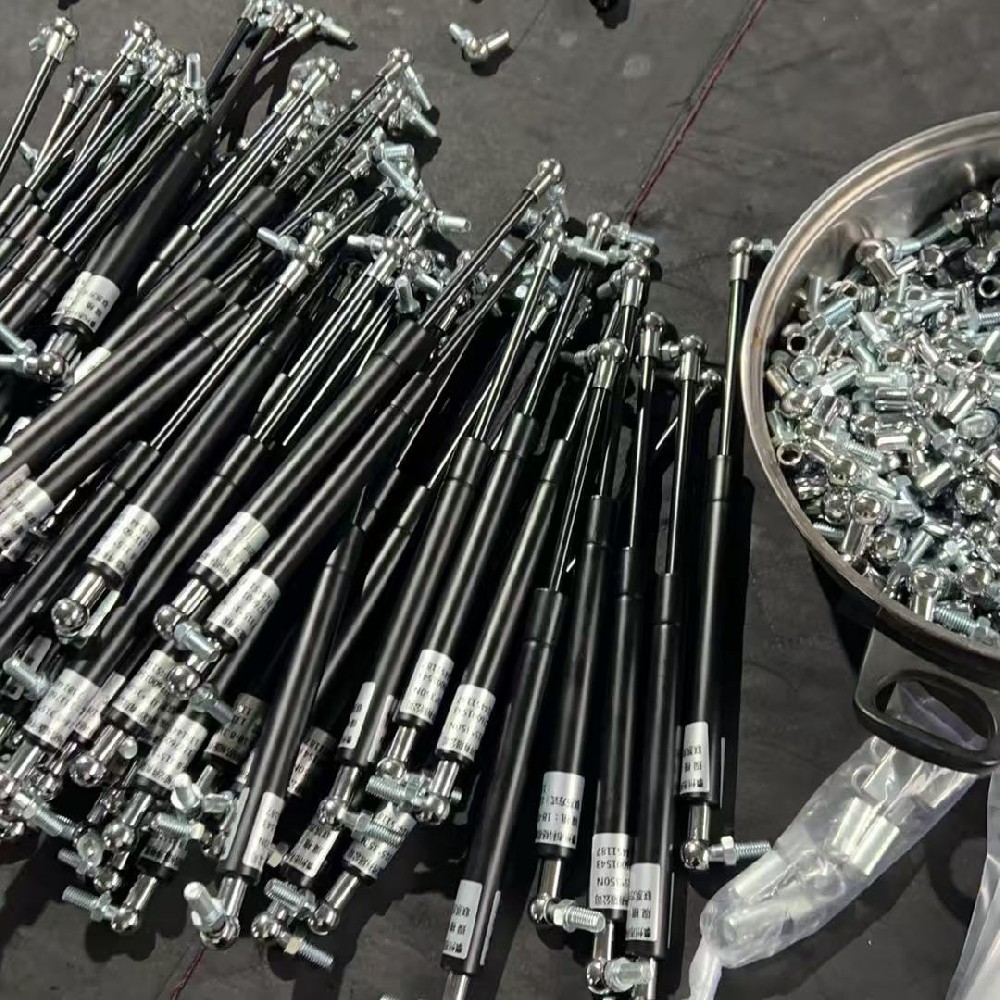
Metal ball sockets with a retaining clip cope with vibration and engine heat better than plastic sockets, which suit light panels in clean conditions.
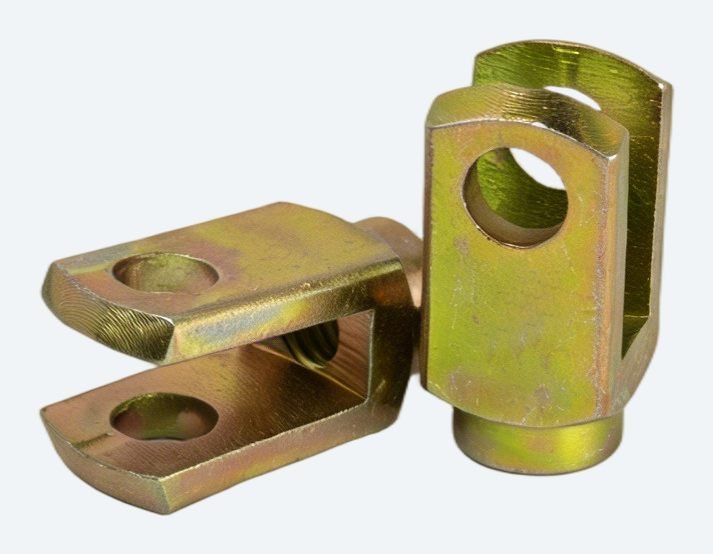
Eyelets and clevises are fixed with a secured pin, so they cannot pop off like an unclipped ball socket. They pivot in one plane only, so the brackets must line up.
Make sure threaded ends are fully engaged and secured. Vibration can unscrew them.
Brackets must carry the peak spring force, reached at full compression, without cracking.
Specify each end: fitting type, thread, ball or pin size, and any brackets. Compare the options on our end fittings and brackets page.
Corrosion protection and when to consider stainless
A standard gas spring has a coated steel tube. Once stones, tools or chemicals break the coating, rust starts there. Fittings and fasteners need protection too.
Consider stainless steel springs and fittings for sprayers and fertilizer spreaders, livestock buildings, daily washdown, and coastal or salted-road work. Grades differ, and a silver finish does not prove the material. Ask for the rod, tube, fitting and fastener materials to be stated in the quotation.
Locking for doors and panels that must stay open
A standard gas spring holds a panel open only by its force, so wind, a slope or a bump can move it. If a window, hatch or door must stay exactly where it is set, use a lockable gas spring. It moves while the release is operated and holds its position when the release is let go. The release can be a lever, or a cable to a handle within reach.
Specify the holding load and direction, rigid or elastic locking (elastic gives slightly under extra load), and the release type and cable length. See our lockable gas springs.
A gas spring is not a safety prop. If anyone works under a raised hood or cover, add a mechanical stay or latch.
Service and replacement planning for dealers
Markings wear off, and one machine may carry several look-alike struts. Good records save time at the parts counter:
Ask for your part number on each strut's label or bag and on the carton.
Keep a cross-reference sheet: machine model, position, original (OE) part number, your number, extended length, stroke, force and both end fittings.
Replace both struts when a panel has two, so they push equally.
Prop the panel before removing a strut. Never cut, drill or heat a gas spring: it is under pressure.
Order well before planting and harvest: bulk production takes 15–20 days, and shipping time comes on top.
Our construction and agricultural gas springs page lists published OE cross-references for hood, cab door, rear window and roof hatch positions.
What an OEM should send for a quote
Drawing or sample, with its revision
Extended length and stroke, measured between end-fitting centers
Force, or the panel weight, center of gravity, hinge position and mounting points
Both end fittings and any brackets
Mounting orientation and opening angle
Temperature extremes, washdown and chemical exposure
Locking requirement and release type
Material requirements for each component
Quantity per order and per year, destination, and FOB or DDP
Start with a sample
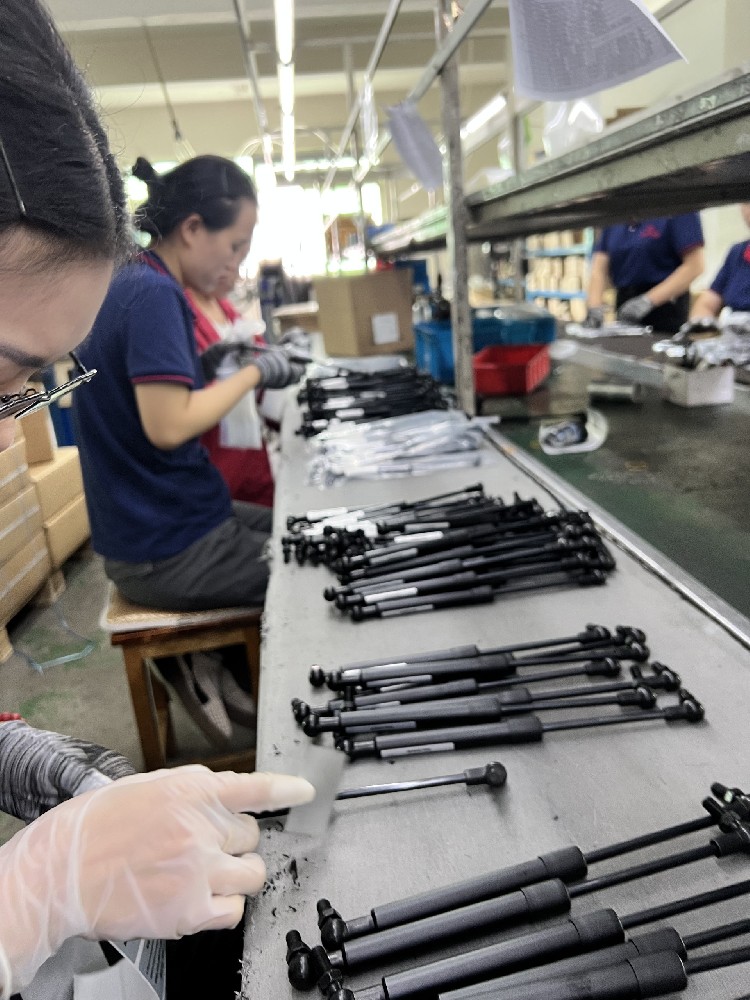
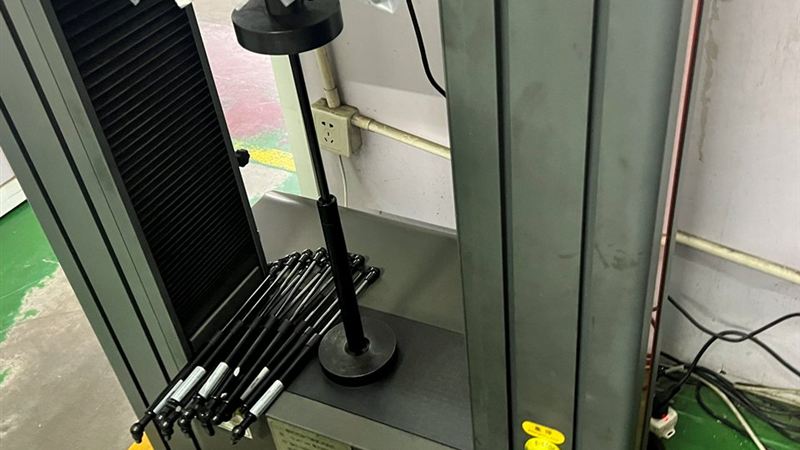
We make gas springs, including lockable and stainless versions, in our own factory in Tianjin, China, and supply matching end fittings and brackets. The minimum order is 100 pcs with mixed models allowed, so hood, door and window struts can share one order. Samples take 3–5 days to make, plus courier time, so you can test fit and force on the machine first. Send your drawing, old part details or parts list for a quotation.