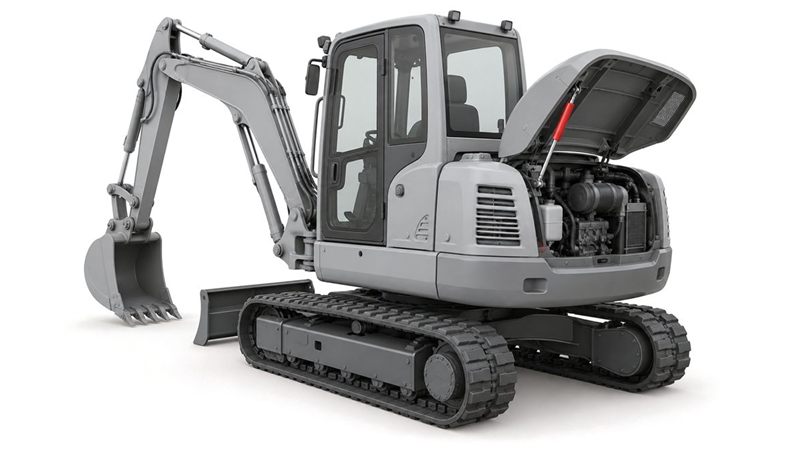
Custom gas spring projects tend to stall in one of two places: a quote request with missing data, or a sample approved without a real test in the product. This guide follows an OEM order from first drawing to repeat bulk order, for purchasing managers and design engineers at equipment makers and distributors. It also covers sample checks and four common mistakes.
Step 1: Send the details that define the spring
A gas spring is defined by its lengths, its force and the connections at both ends. Price and lead time depend on all of them, so a quote that guesses any one of them usually has to be redone.
What to send us
| Item | Why it matters | Example |
|---|---|---|
| Extended length | Sets the open position. Measure center to center of the end fittings, rod fully out. | 420 mm, ball center to eyelet center |
| Stroke | Rod travel. Extended length minus stroke is the compressed length, which must fit the closed position. | 150 mm, so 270 mm compressed |
| Force, or the data to calculate it | Too strong and the part is hard to close; too weak and it will not stay open. Weight alone does not decide the force. | 250 N per spring, or: lid 9 kg, 500 mm deep, two springs, opens to 90°, mounting points on a side-view sketch |
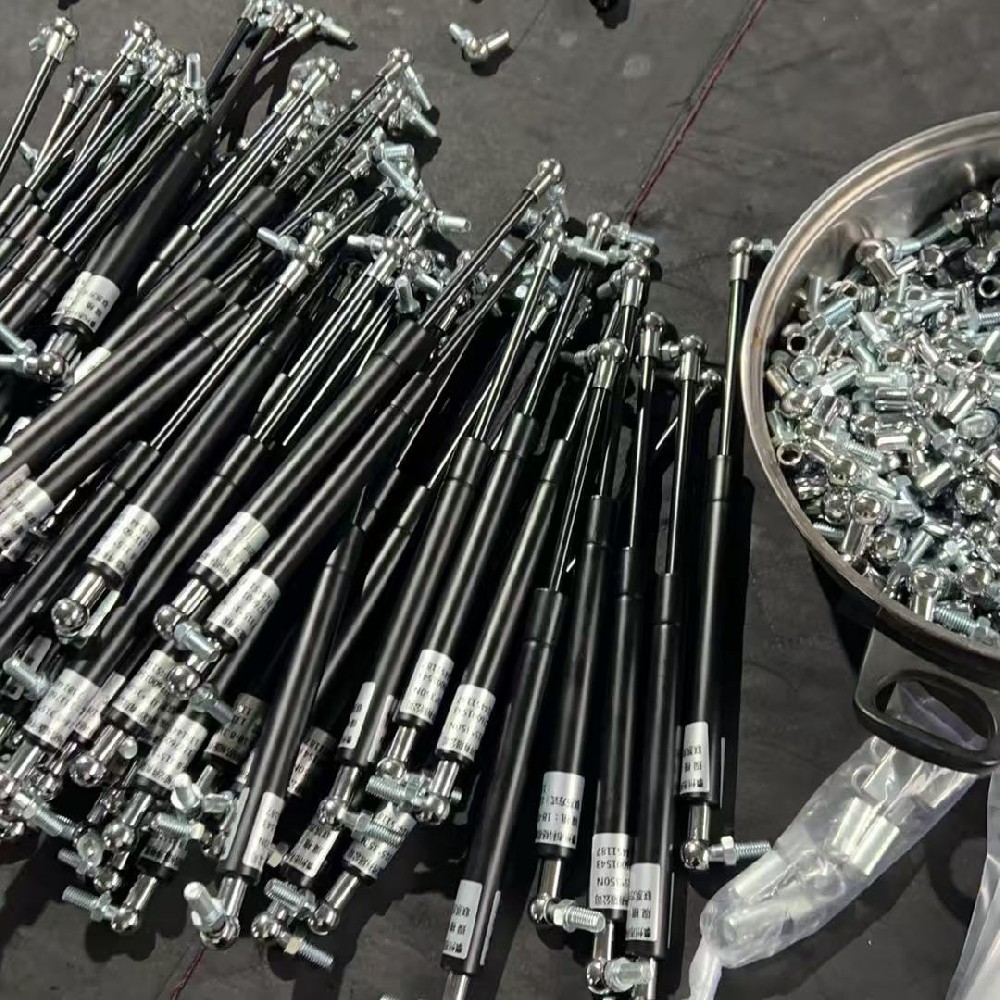
| End fittings, both ends | A correct spring still fails if one end does not match. Rod end and tube end are specified separately. | Rod end: ball socket for a 10 mm ball stud. Tube end: eyelet for an M8 bolt |
| Mounting orientation | Many standard springs are designed to work rod-down; a rod-up or horizontal layout must be known before choosing. | Rod pointing down with the lid closed |
| Operating environment | Outdoor use, washdown and cold affect the seal, finish and force, and show whether stainless steel is worth considering. | Outdoor machine, rain and road dust, winters below freezing |
| Annual and per-order quantity | Order size and yearly volume affect price, production planning and packing. | 6,000 pcs a year, ordered as 500 pcs a month across two models |
| Drawing or old part | A drawing with a revision letter becomes the reference for sample and bulk order; an old part shows what a sketch can miss. | PDF drawing Rev. B, or the old spring plus photos of its label and both ends |
Metric or inch units are both fine; just write the unit next to every number.
For a new lid or hatch, our gas spring calculator estimates force, lengths and stroke from the lid weight and mounting points; send the result with your sketch. Our custom and OEM gas spring page shows the options you can specify.
Step 2: Quotation and specification check
Before pricing, we go through the lengths, stroke, force and both end fittings with you. If a detail is missing or two figures conflict, we flag it rather than guess.
The quotation lists each model on its own line with its specification, fittings and quantity. Keep the agreed revision on file; the sample and the bulk order both refer to it.
Step 3: Samples in 3–5 days
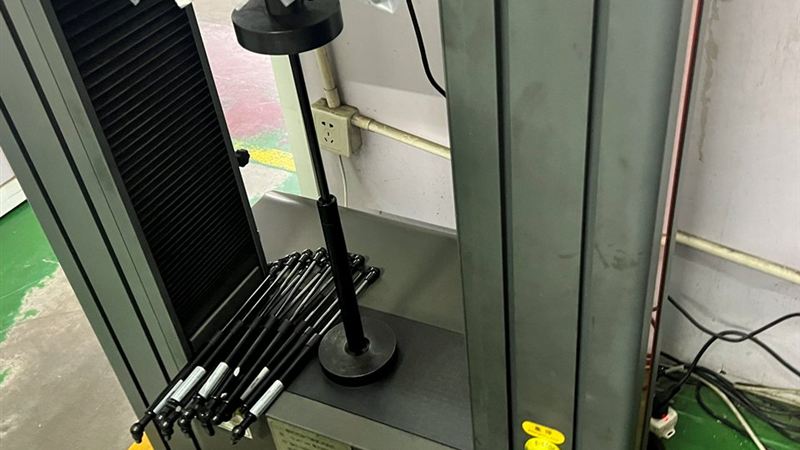
For a new design, or a replacement with uncertain data, a sample is made to the confirmed specification. Samples take 3–5 days to make; allow extra days for courier delivery. There is a charge for samples, and it is refunded when you go on to place an order.
Order enough pieces for a complete product: a lid with two springs needs a pair, plus a spare if one goes to a separate test.
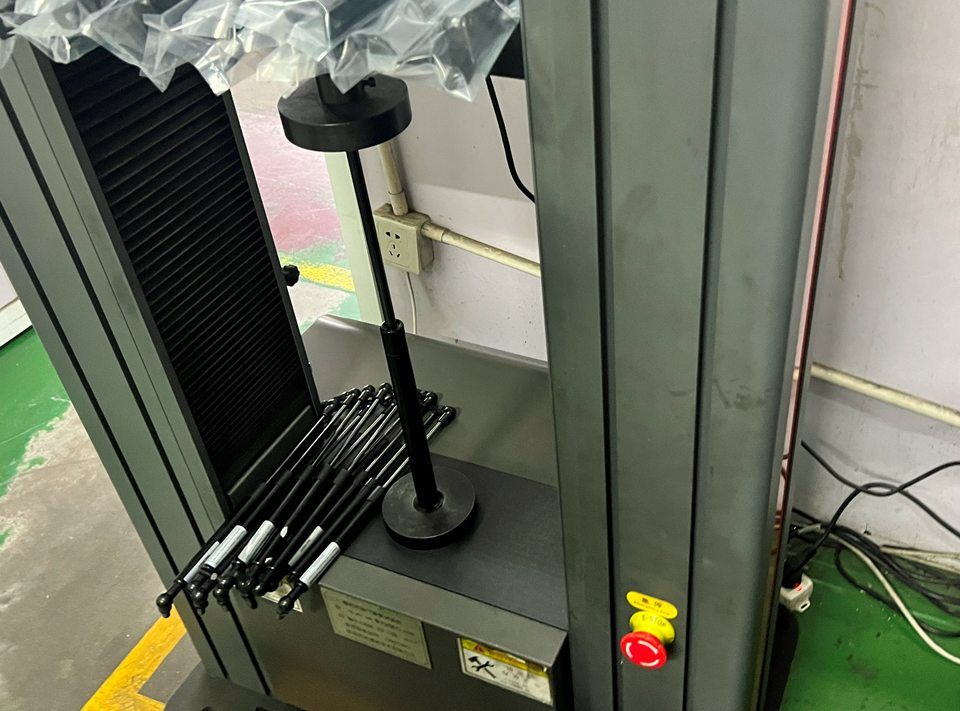
What to check on the samples
Install the samples in the real product at its final weight, with handles, glass and trim fitted. Then check:
Fit. Both ends attach without forcing, nothing rubs on the lid, frame or wiring through the full movement, and neither joint twists or binds.
Force feel. Opening and closing effort, where the lid starts to rise on its own, and whether it stays open and still latches shut.
Extension speed. How fast the part rises, and whether it reaches the end of travel smoothly rather than with a bang. If the product works outdoors, repeat the check on a cold day, since gas spring force drops in the cold.
Locking, for lockable springs. The spring holds the part under the working load and releases smoothly with the lever or cable you will use in production.
Marking and labels. Part reference, force marking and any custom label are correct and readable; your service team and customers will reorder from them.
Step 4: Approval and mass production in 15–20 days
Send us your findings with photos; any change becomes a new revision of the specification. Then approve in writing, naming the drawing revision or sample reference that production should follow. If the trial led to a big change, such as a new force or a different fitting, ask for a revised sample before releasing the bulk order.
Bulk production takes 15–20 days. Agree the inspection points when you confirm the quotation, typically lengths, force and both end fittings against the approved drawing.
Order terms at a glance:
Minimum order: 100 pcs per order. Different models can be mixed in one order, for example 60 of one spring and 40 of another.
Payment: 30% deposit with the order; the remaining 70% before shipment.
Shipping: FOB any Chinese port, such as Tianjin, Shanghai or Ningbo, or DDP on request.
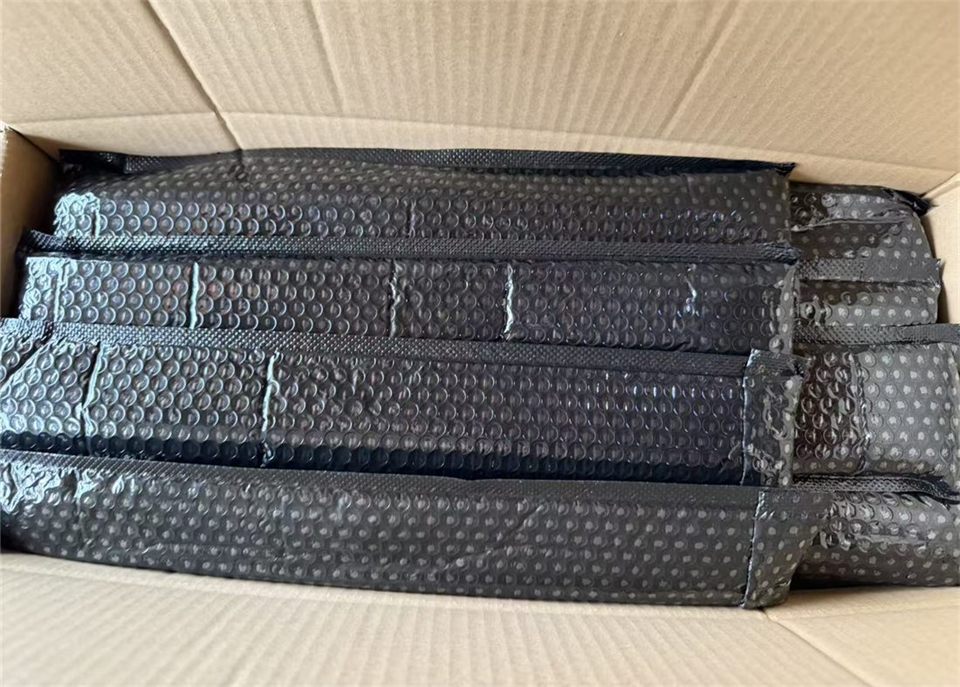
Packing and labels: agree individual protection, quantity per carton and carton labels before production. For your own part number or label, send the artwork with the inquiry; what can be printed is confirmed per order.
On repeat orders, quote the same part reference and revision, and note any change on the order itself.
Four mistakes that delay custom gas spring projects
Each of these is easy to avoid at the quote stage and expensive to fix once a batch is made.
Sizing force from weight alone. Two lids of the same weight can need very different springs. The center of gravity, hinge position, mounting points and opening angle all change the force, so send the geometry along with the weight.
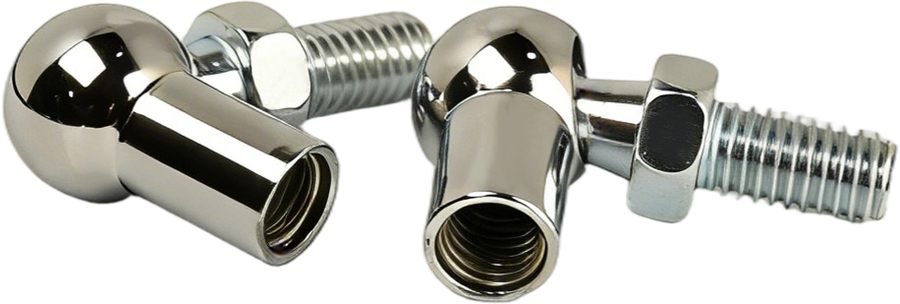
Choosing the wrong end fitting. The spring is right but will not attach: a ball socket that does not match the ball stud, an eyelet bore smaller than the bolt, or a thread one size off. Specify the rod end and the tube end separately, and compare the options on our end fittings and brackets page.
Mounting rod-up when the design needs rod-down. Many standard compression gas springs are meant to work with the rod pointing down, so the oil inside stays at the seal and in the damping zone. Mounted rod-up, the same spring can lose its end-of-travel cushioning and wear its seal sooner. If your layout needs rod-up or horizontal mounting, say so at the quote stage.
Ordering in bulk without a sample. On a new design, a drawing cannot show how the lid feels, how fast it rises or whether a trim strip gets in the way. A sample costs a few days and its fee is refunded with the order; a wrong batch costs weeks.
Send your drawing or parts list
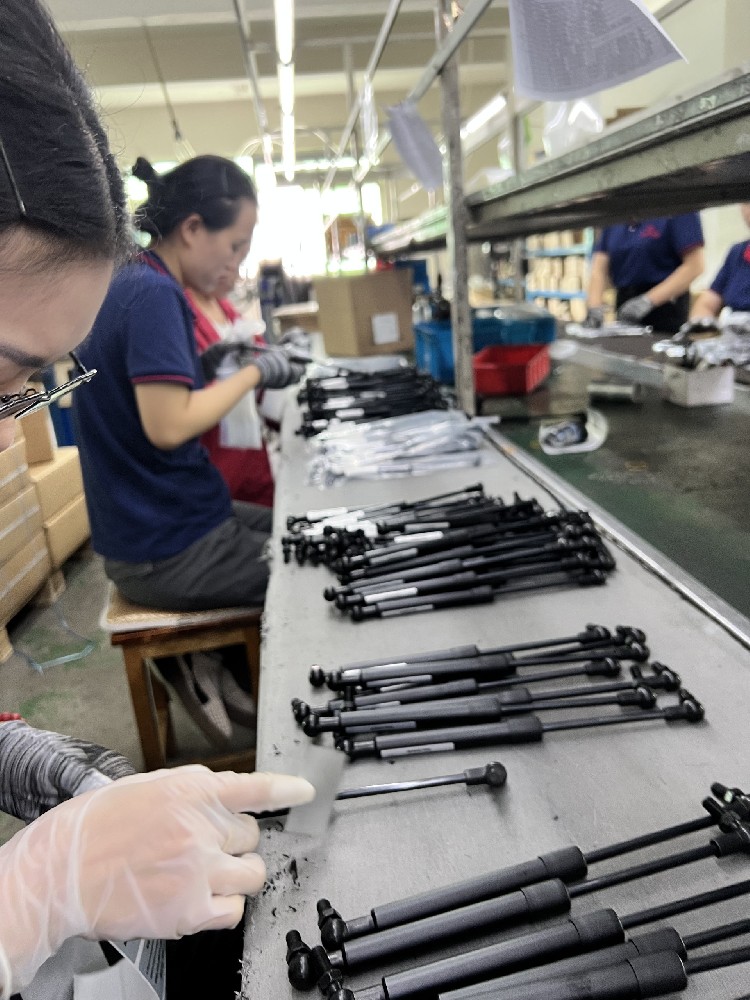
Horizon makes gas springs in its own factory in Tianjin, China, and supplies distributors and equipment makers factory-direct. Send your drawing, old part details or parts list, with a quantity for each model, through our quote page. The list can be a spreadsheet, a PDF or simply a photo. We will confirm the specification for each line and reply with an itemized quotation.