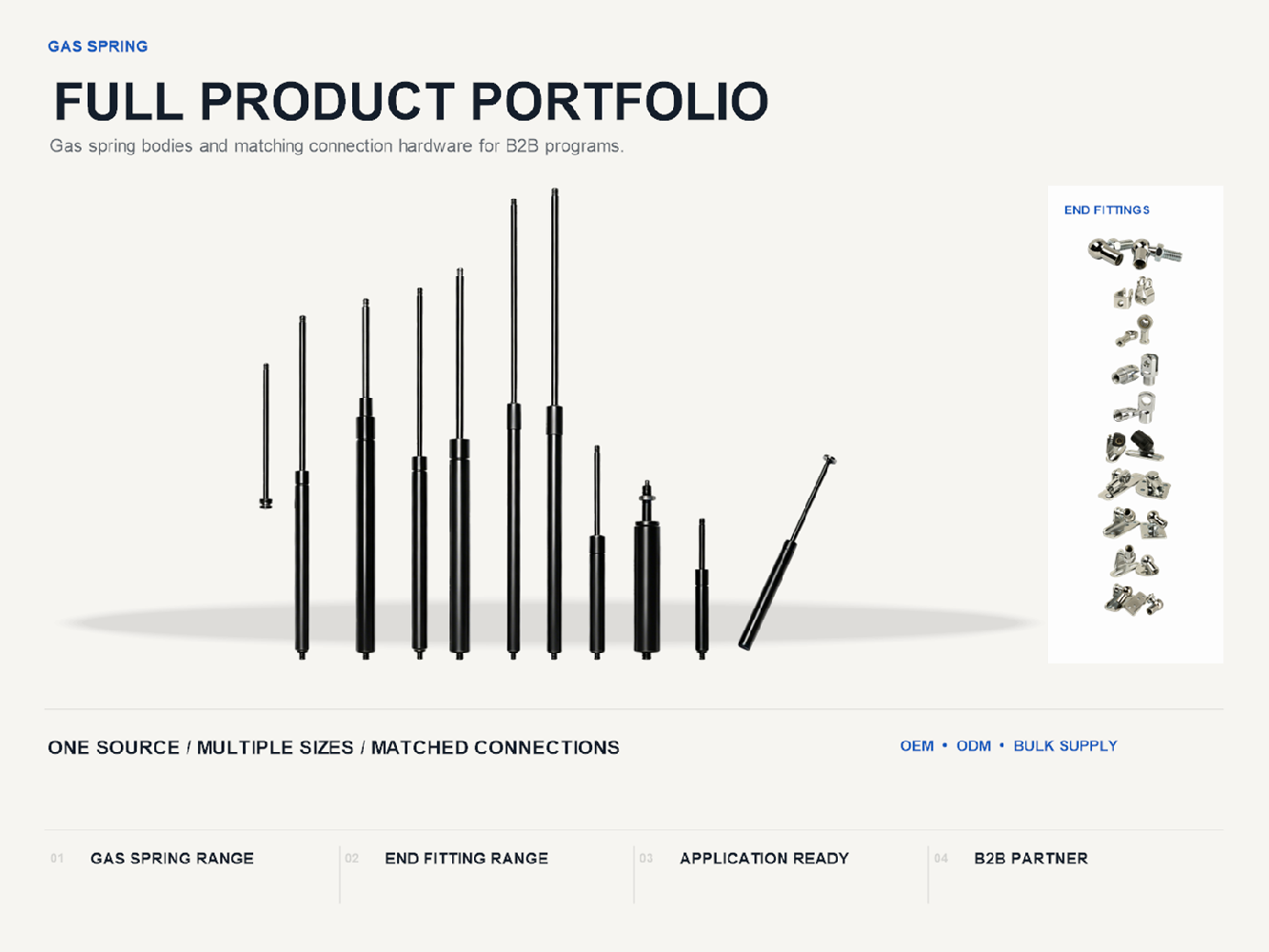
For a bulk gas spring order, keep the supplier part number, force marking and production code in separate fields. Match the complete part reference to the agreed specification, then confirm how each unit and carton will be identified. Similar appearance is not enough to release a delivery to the assembly line or place a repeat order.
For OEM buyers and distributors, the practical question is simple: can purchasing, receiving and assembly all tell which gas spring belongs to which order?
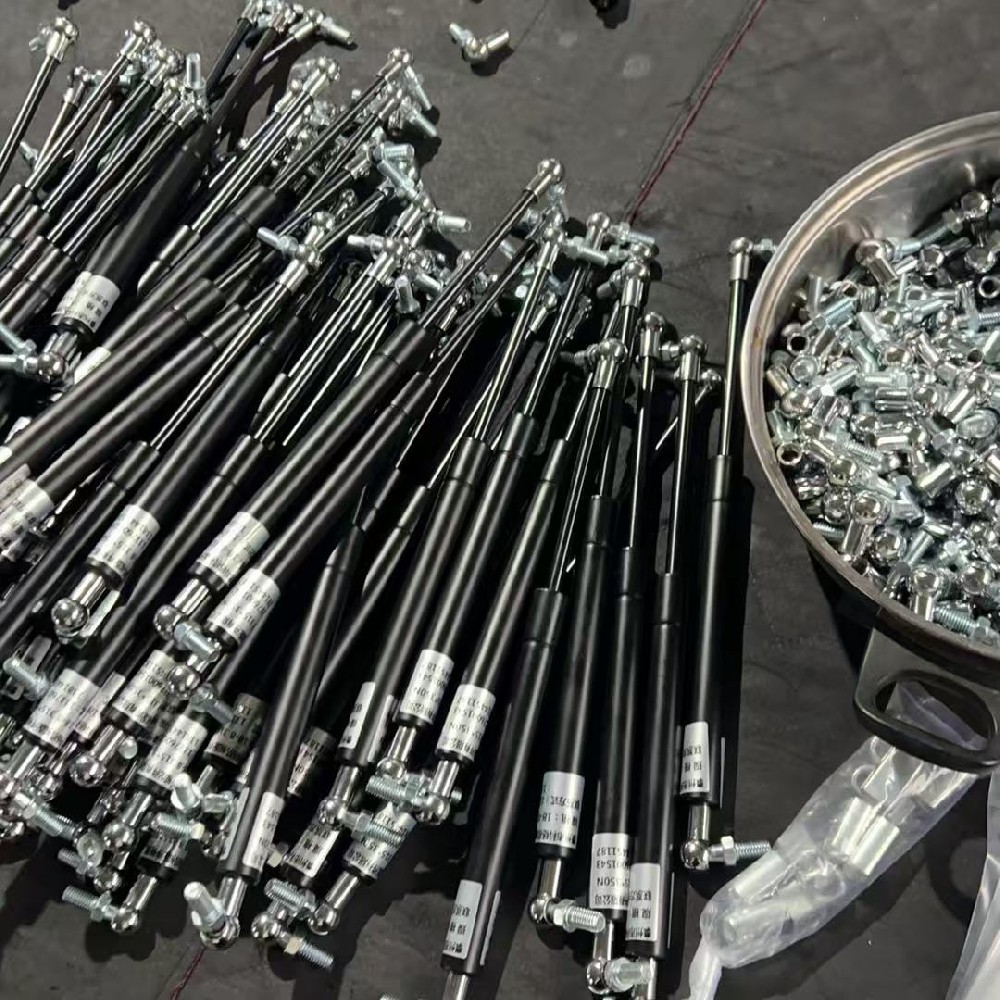
Do not confuse a part number with a date code
A cylinder can carry several numbers with different purposes. As a concrete manufacturer example, SUSPA's C16-16805 product page tells buyers to order by the C16 part number, rather than the three- or four-digit manufacturing date code. It also warns that a nonmatching part number may mean different internal components.
That example is specific to SUSPA; it is not a decoding rule for every brand. For an unfamiliar marking, send a clear photograph and ask the supplier to identify each field. Preserve letters, leading zeros and suffixes in your purchasing record. Keep the force value and its unit separate from the part reference.
Connect the marking to the approved specification
A readable label is a useful starting point, but the order needs a specification behind it. Camloc's gas spring equivalent sizing form requests the current part number alongside dimensions, force and fittings at both ends. This illustrates why one visible number should not become the whole purchasing description.
Build a short reference record for each approved item:
Your internal item code and the supplier's complete part number.
Drawing number, revision and approval date.
Agreed force specification, dimensions and connection at each end.
Reference photographs and the sample approval record, where applicable.
Use that record for repeat orders. If a drawing or component changes, confirm the revised specification before ordering again. Include the connection details from your drawing when reviewing gas spring end fittings and brackets.
Agree identification before the shipment
The following are practical purchasing controls to agree with your supplier; they are not a universal gas spring marking standard.
Request a proposed unit label and carton label before the order is packed. Specify which fields belong on each: part reference, force where required, quantity, carton number and any agreed production or lot reference. Confirm what the production code actually identifies and which records the supplier can retrieve from it.
For several variants in one delivery, request separate inner packs or cartons and a packing list that maps each pack to its item code. A barcode can support this process, but its encoded information still needs agreement. Do not assume a barcode alone provides traceability.
What if the label is unreadable or inconsistent?
Keep the affected parts separate while identification is resolved. Photograph the whole unit, both connections and every readable marking, and retain the carton label and purchase-order reference. Ask for written clarification before relabelling or substituting the part. A close visual match does not establish that an unidentified unit is the ordered item.
Does a matching label prove the batch passed inspection?
No. Product identification and acceptance evidence answer different questions. Check the delivery against the agreed inspection requirements as well as the order reference. A lot code is useful only when its meaning and connection to supporting records are understood.
Preparing an OEM or distributor order? Review Horizon's custom supply and packing requirements, then send your drawing, existing markings, quantities and preferred label fields. Mark unknown details clearly so they can be reviewed before the specification is confirmed.
#HorizonGasSpring