
Practical answers for your next order.
Part identification, dimensions, fittings, samples and bulk purchasing.
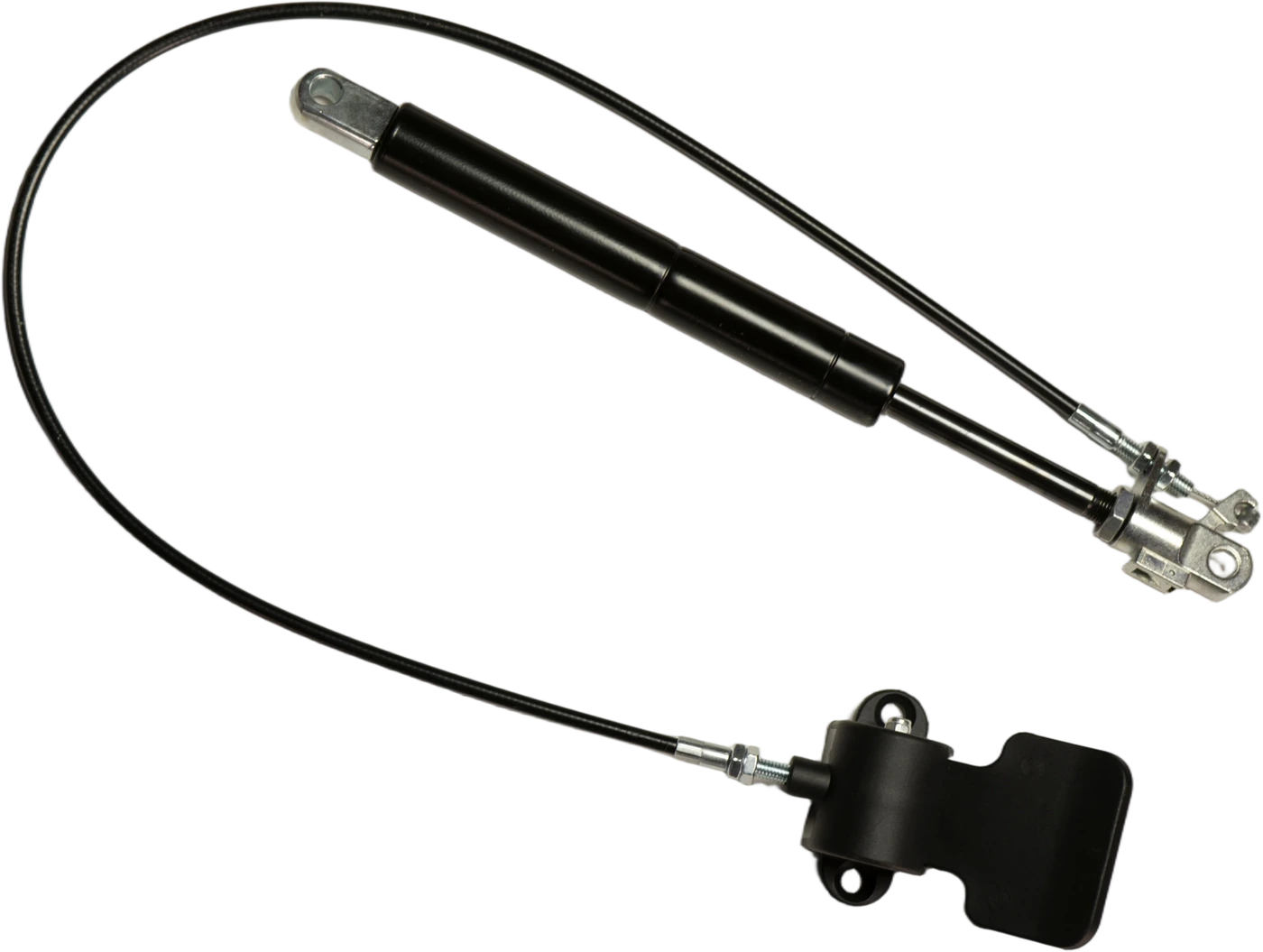 LOCKABLE GAS SPRING / CABLE RELEASE
What products does Horizon supply?
Horizon supplies gas springs and connection hardware for replacement-parts businesses, distributors and equipment manufacturers. The range includes compression gas springs, lockable units and release controls, traction gas springs, stainless material configurations, chair gas lifts, end fittings and brackets. Automotive and furniture applications are the main focus.
Can I request a quote using an existing part number?
Yes. Send the reference brand and complete part number or printed marking, the application and your quantities. Photos of the complete unit and both ends help identify the version to be quoted.
Can I send measurements in inches and pounds-force?
Yes. State the units with each dimension and force value. Reference tables show metric and US customary values where relevant; the order specification records the agreed units and mounting references.
What if I do not know every dimension?
Start with the marking, application and clear photos. We will identify which details are needed to prepare the quotation. You do not need to design a new mechanism to ask about an existing part.
What determines the price and order quantity?
The selected specification, force, fittings, material configuration, quantity and packaging affect the quotation. Send a quantity for each line in a mixed parts list.
How do I raise an order or product issue?
Email sales@horizongasspring.com with the order reference, affected part and quantity, a description of the issue, and clear photographs. Include the label or batch marking where available. Keep the parts intact so the issue can be reviewed against the agreed specification and order terms.
Can you supply end fittings with the gas spring?
Yes. Gas springs can be discussed together with their end fittings and mounting hardware. Eyelets, ball sockets, threaded connections and brackets are shown in the fitting gallery. The rod-end and tube-end connections are identified separately.
How are samples and repeat orders handled?
For a new or incompletely identified assembly, start with the proposed specification and sample quantity. Review fit, travel, operating effort and any locking or release function in the intended mechanism. Keep the approved sample or drawing revision with the subsequent order.
Is an electric liftgate actuator a regular gas spring?
No. Powered liftgate actuators and conventional lift supports are different assemblies. Identify whether the vehicle uses a manual or powered system before requesting a replacement.
Find the detail behind the part.
Browse the topics or search the technical questions. For an order, use the approved part specification and installation requirements.
92 technical questions across 8 topics
Selection & force 10 questions
How do I choose the right gas spring for a lid, hatch, or machine cover?
Provide the moving panel's weight, dimensions, hinge position, center of gravity, opening angle, available mounting points, desired handling force, number of springs, operating temperature, cycle frequency, environment, and required end fittings. A side-view drawing or clear photos with dimensions are strongly recommended.
How do I calculate the required gas spring force?
A simplified static estimate balances the panel moment around the hinge: panel weight force multiplied by the center-of-gravity distance, divided by the number of gas springs and the perpendicular lever arm of each spring. Actual selection must also consider angles, friction, force progression, temperature, damping, and desired opening and closing effort.
How many newtons do I need for a gas spring?
There is no single force value for a given panel mass. The required force in newtons (N) depends on the center of gravity, hinge and mounting geometry, number of gas springs and desired opening and closing effort. Include those details in the quotation request, then confirm the proposed force in the intended installation.
Why do lid weight and center of gravity matter?
For the same panel weight and opening position, a center of gravity farther from the hinge creates a larger gravitational moment. The required gas spring force also depends on the perpendicular lever arm of the spring, the number of springs and the desired handling effort.
Where should gas springs be mounted, and how do the mounting points affect force?
The relevant distance is the perpendicular lever arm from the hinge to the gas spring's line of action. Moving an attachment point changes this lever arm, spring travel, clearance and opening or closing effort. Review the full motion rather than choosing a location from hinge distance alone.
Do I need one gas spring or two?
Two gas springs usually provide better balance, reduce twisting, and distribute loads more evenly on wide or flexible panels. One gas spring may be acceptable on narrow, rigid, well-guided applications, but the hinge and mounting structure must be designed for the asymmetric load.
How does the opening angle affect gas spring selection?
The opening angle changes the geometry, spring length, lever arm, and final holding force. It also determines head clearance and whether the panel becomes self-rising or self-closing. The desired angle should be fixed before the mounting points are approved.
What do self-opening, self-closing, and crossover point mean?
Self-rise is the point at which the gas spring opens the panel without further assistance. Self-close is the point at which gravity closes it. Crossover is the transition between operator-controlled movement and spring- or gravity-driven movement; it should be intentionally designed, not left to chance.
What happens if a gas spring is too strong or too weak?
Excessive force can cause sudden opening, high closing effort, hinge deformation, bracket failure, or inability to latch. Insufficient force can allow the lid to fall, fail to reach the open position, or require excessive lifting effort. Correct force must be validated in the real assembly.
Is a force calculation enough, or should I test a sample?
No. Calculation establishes a starting point, but production approval should include prototype installation and testing at the lowest and highest expected temperatures. The final review should check opening effort, closing effort, speed, latch load, bracket stress, clearance, and safe failure behavior.
Dimensions & replacement 10 questions
What is gas spring stroke?
Stroke is the usable travel of the piston rod from the fully extended position to the fully compressed position. It is not the same as the overall extended length. The application should not force the unit beyond its specified stroke.
How is the extended length of a gas spring measured?
Extended length is the distance between defined reference points on the two end connections when the piston rod is fully extended. For ball sockets, eyelets, clevises, or threads, the measuring reference must be stated clearly on the drawing.
How is the compressed length of a gas spring measured?
Use the same defined mounting references at the fully retracted and fully extended positions. With identical end fittings and datums, retracted length equals extended length minus stroke. Confirm this dimension from the drawing; do not force a spring closed to obtain it.
How do I measure a gas spring or gas strut for replacement?
Measure center-to-center for eyelets and ball sockets, or use the defined thread or shoulder reference for threaded ends. Record both fully extended length and stroke if possible, as well as tube diameter, rod diameter, end-fitting type, thread size, and force marking.
Why should the installation retain some unused stroke?
A small stroke reserve prevents the gas spring from bottoming out because of manufacturing tolerances, bracket deflection, hinge wear, or assembly variation. The exact reserve depends on the design, but the application should normally use an external mechanical stop rather than the gas spring's internal limit.
How do I choose the correct tube and piston-rod diameter?
Rod and tube diameters affect the available force, force progression, structural design and installation space. Specify both separately. A larger diameter does not authorize side loading; the selected unit and joints still need an aligned, unobstructed load path.
Which gas spring end fittings are available?
Common options include ball sockets, eyelets, clevis forks, threaded ends, angle joints, and custom brackets. Selection depends on alignment, articulation, load, corrosion resistance, assembly method, and whether quick removal or a retaining clip is required.
Can the thread size tell me the gas spring force?
No. M6, M8, M10, or other threads describe the mechanical connection only. Force depends on internal pressure and geometry. Two gas springs with the same thread and length can have very different force ratings.
How do I replace another brand or competitor part number?
Use the complete original marking or part number as a starting point, then compare assembled lengths, stroke, force, both connections, installation position and operating behavior. A number may not reveal damping, force tolerance or internal features. A fitted sample is useful where the replacement data is incomplete.
What force and dimensional tolerances apply?
There is no single tolerance for every gas spring. Length, stroke, force, thread, coating, and performance tolerances depend on the series, production method, and agreed drawing. Buyers should request the controlled drawing and inspection criteria before placing a production order.
Connections & installation 10 questions
Which way should a gas spring be installed?
Many conventional compression gas springs use rod-down installation to support seal lubrication and end-position damping. Follow the selected model's installation instructions. Traction, lockable and special damping designs can have different requirements.
Can a gas spring be mounted rod-up or horizontally?
Yes, but only when the design and damping requirement allow it. Some special gas springs include lubrication or dynamic damping features for alternative orientations. Standard products may show reduced damping or accelerated seal wear if installed incorrectly.
What is side loading, and why does it damage gas springs?
Side loading occurs when the gas spring is forced to bend or operate out of alignment. It increases friction, damages the rod surface and guide, distorts seals, and can cause early leakage or structural failure. End fittings should articulate freely throughout the full movement.
How should gas spring mounting points be aligned?
The two attachment axes should remain aligned with the gas spring's line of action through the full opening cycle. Brackets should not twist the ball sockets or eyelets. Where assembly tolerances are large, use suitable articulating joints rather than forcing rigid connections.
How should two gas springs be installed as a pair?
Use matching part numbers, equal mounting geometry, and symmetrical brackets. Both units should reach the same positions without one bottoming out first. The lid, hinges, and brackets must be stiff enough to prevent one spring from carrying most of the load.
How strong should gas spring mounting brackets be?
Check bracket, fastener, weld and supporting-structure loads throughout the movement, including the maximum spring force and any dynamic or external loads. Nominal F1 alone is not a bracket capacity rating. Provide clearance for joint articulation and keep the rod free from interference.
How can I install a gas spring that is difficult to compress?
Installation method depends on the application and available access. Never force a high-pressure gas spring by hand or with unsafe tools. Design the assembly sequence so the panel geometry, a controlled fixture, or an approved pressure-adjustable sample allows safe attachment.
Can a gas spring be used as an opening or closing stop?
Not unless the specific model is explicitly rated for that function. A separate mechanical stop should normally define the final panel position, and a small reserve stroke should remain in the gas spring to avoid impact and tolerance stack-up.
How should the piston rod be protected?
Keep it free from scratches, dents, paint, adhesive, weld spatter, grinding dust, sand, and aggressive chemicals. Do not grip the polished rod with pliers. Even small surface damage can cut the seal and cause gas or oil leakage.
Can a gas spring be drilled, welded, cut, heated, or repainted?
The pressure tube and piston rod must not be welded, drilled, cut, heated, bent, or machined. Coating the cylinder may be possible only under an approved process that does not heat or contaminate the unit; the piston rod and warning markings must remain untouched.
Troubleshooting & maintenance 10 questions
Do gas springs need maintenance?
Standard gas springs are generally sealed and maintenance-free. Routine work is limited to keeping the rod clean, checking end fittings and brackets, and replacing units that show damage, leakage, corrosion, looseness, or significant force loss.
Should I lubricate the piston rod?
Normally no external lubricant is required. Unapproved grease can attract dust or attack the seal material. Clean the rod gently with a soft lint-free cloth and use only a lubricant specifically approved by the manufacturer for that product.
How long do gas springs last?
Life depends on seal design, rod finish, force, stroke usage, cycle rate, temperature, orientation, contamination, side load, vibration, and storage. A cycle-life figure is meaningful only when the test conditions and acceptable remaining force are defined.
Can a gas spring lose pressure while in storage?
Follow the storage conditions and shelf-life guidance for the selected design. Long storage can affect first-movement friction, while contamination or rod damage can affect the seal. Do not infer the condition of an old unit from appearance alone; check identification and function before use.
Is oil on the piston rod normal?
A very light film can be normal because internal oil lubricates the seal. Visible dripping, repeated wetness, dirt sticking to a large oil deposit, or force loss indicates possible leakage and should be investigated.
Why has my gas spring lost force?
Possible causes include natural gas loss, damaged seals, a scratched rod, excessive temperature, corrosion, side loading, internal wear, or an application that has become heavier or misaligned. Confirm the actual force and inspect the mounting before selecting a stronger replacement.
Why will my gas spring not compress?
The force may be higher than expected, the mounting geometry may be over-center, the mechanism may be binding, or the unit may be a lockable type that has not been released. Do not use uncontrolled tools or body weight to force it closed.
Why does the lid open too fast or slam at the end?
Check the actual force marking, mounting geometry, operating temperature and the damping specification. Installation orientation can affect damping on conventional compression designs. An opening mechanism that moves unexpectedly should be supported and reviewed before further use.
Why is the gas spring noisy or moving unevenly?
Possible contributors include contaminated rod surfaces, side loading, distorted brackets, seal friction after storage, worn hinges, mismatched paired springs or unsuitable damping. Check the installation and the model's handling instructions; persistent or new symptoms need investigation.
Should paired gas springs be replaced together, and can they be repaired?
Replacing both units usually restores balanced force and movement. Standard sealed gas springs are not field-repairable and should not be opened or refilled by the user. Replacement or factory-authorized service is the safe approach.
Principles, types & locking 22 questions
What is a gas spring?
A gas spring is a sealed, pressurized component used to assist movement or support and position parts. A conventional compression gas spring produces outward force; a traction design produces inward force. Lockable designs add a release-controlled holding function.
How does a gas spring work?
In a conventional compression gas spring, pressurized nitrogen acting on the effective rod area creates outward force. The pressure tube, piston, seal and guide work together during movement. Oil supports lubrication and, in suitable designs, end-position damping. Traction and lockable designs use different internal arrangements.
Are "gas spring," "gas strut," and "gas lift support" the same product?
In many markets these terms are used interchangeably. "Gas spring" is the general engineering term, "gas strut" is common in automotive and industrial use, and "lift support" is widely used for vehicle hoods, tailgates, and access panels.
Is a gas spring the same as a shock absorber?
No. A standard gas spring generates force and supports a load, while a shock absorber or hydraulic damper mainly resists motion and dissipates energy. Some gas springs include end-of-stroke damping, but that does not make them a replacement for a purpose-designed shock absorber.
What is inside a gas spring?
A typical gas spring contains compressed nitrogen, a small quantity of oil, a piston, a piston rod, a pressure tube, guide and sealing components, and end connections. Nitrogen is used because it is inert and stable for this application.
Why is the unit sealed?
The unit must retain high-pressure gas while allowing the piston rod to move repeatedly through the seal. Opening, drilling, heating, welding, or modifying the pressure tube can destroy the pressure boundary and create a serious safety risk.
What does F1 mean?
F1 identifies a specified extension-force measurement, typically near the extended position. The measuring point, direction, temperature, conditioning, speed and tolerance must follow the selected product's drawing or test method. Do not compare two force readings taken under different conditions as if they were equivalent.
Why does the force increase as the gas spring is compressed?
When the piston rod enters the cylinder, it reduces the available gas volume. The nitrogen pressure therefore rises, so the force near the compressed position is higher than the force near full extension. This increase is described by the force ratio or progression ratio.
What is breakaway force or stiction?
Breakaway force is the short initial force required to start the piston rod moving after it has been stationary. It results mainly from seal friction and can be more noticeable after long storage, at low temperature, or on the first operating cycle.
What is end-of-stroke damping?
End-of-stroke damping slows the piston rod before it reaches full extension or compression. In conventional designs, the piston enters an oil zone near the end of travel; in other designs, internal grooves or metering features provide controlled speed over a selected part of the stroke.
What is a fixed-force compression gas spring?
A fixed-force compression gas spring provides a specified outward force and is compressed by the application load. Movement depends on the balance of spring force, geometry, friction and external load. Common uses include hoods, tailgates, furniture lids, machine guards and storage covers.
What is an adjustable-force gas spring?
Some gas spring designs have a valve that permits controlled force reduction during application development. This is a distinct feature, not an adjustment available on every unit. Follow the specific supplier procedure; ordinary sealed gas springs must not be opened or vented to change their force.
What is a traction or tension gas spring?
A traction gas spring works in the opposite direction to a standard compression gas spring. The piston rod is pulled inward by the internal force, making it suitable where the installation needs a pulling force rather than an extending force.
What is a lockable gas spring?
A lockable gas spring includes an internal valve that allows movement when actuated and holds the selected position when the valve is released. It is used in medical beds, chairs, tables, equipment covers, and mechanisms requiring continuous adjustment.
What is the difference between elastic and rigid locking?
Elastic locking allows a small amount of spring movement under additional load because the gas can still compress. Rigid locking uses an oil-separated or specially configured hydraulic section to resist movement much more firmly in the specified direction, up to the rated locking load.
Can a lockable gas spring lock rigidly in both directions?
Some designs can provide rigid locking in both directions, while others are rigid in compression or extension only. The correct design depends on mounting orientation, internal construction, release system, and the maximum external load. These points must be confirmed on the technical drawing.
When should stainless steel gas springs be used?
Consider a suitable stainless material configuration when moisture, salt or cleaning exposure makes corrosion resistance important. Confirm the grade of the rod, tube and fittings separately, together with seals and cleaning conditions. Stainless appearance does not establish material grade, hygiene approval or suitability for immersion.
What is a gas spring with a safety locking tube?
Some gas springs are offered with a mechanical locking or safety tube that engages at a defined open position. The mechanism's capacity, engagement, release and permitted application must be confirmed for that specific assembly. It is a separate feature from an internal continuously lockable valve.
What is a gas damper?
A gas or hydraulic damper is designed primarily to control speed rather than support weight. It can slow opening, closing, sliding, or impact movement. The damping direction, speed range, mounting orientation, and operating temperature must be specified.
Where are gas springs commonly used?
Typical applications include automotive hoods and tailgates, furniture and storage beds, cabinets, medical equipment, agricultural machinery, buses and trucks, industrial guards, access panels, toolboxes, solar equipment, marine hatches, and special automation systems.
What is the difference between a gas spring and a gas damper?
A gas spring provides lifting and support force, while a gas damper is designed primarily to control motion speed. Some gas springs include damping features, but they are not a substitute for a dedicated damper in high-speed or impact applications.
What is the force ratio or progression ratio of a gas spring?
Force progression describes how the spring force changes over its stroke; the force ratio compares defined force values at different positions. Rod diameter, tube volume and internal design influence it. Request the applicable force points, measurement conditions and ratio for the selected part rather than assuming one universal range.
Materials & working environment 10 questions
What is the normal operating temperature range?
The selected gas spring's operating and storage limits depend on its seals, oil, internal design and application conditions. Provide the expected minimum and maximum temperatures and confirm the approved limits in its technical documentation.
How does temperature affect force?
Gas pressure and spring force generally increase with temperature and decrease as it cools. Temperature also changes oil viscosity and damping behavior. Use the selected part's temperature specification and verify the mechanism at its intended hot and cold operating conditions.
What happens at low temperature?
Extension force decreases and the oil becomes more viscous, so movement may be slower and breakaway force more noticeable. At temperatures below the approved limit, seals may harden and performance or life can be reduced.
What happens at high temperature?
Extension force increases, oil viscosity decreases, and opening speed or closing effort may rise. Excessive heat accelerates seal aging and gas permeation. A gas spring must never be exposed to fire, welding heat, or temperatures above its rated limit.
Are standard painted gas springs corrosion-proof?
No. Painted or powder-coated carbon-steel units provide a defined level of corrosion protection but are not immune to rust, especially after coating damage or long exposure to salt, humidity, chemicals, or standing water.
What does a salt-spray test result mean?
Salt-spray testing compares coating performance under a controlled laboratory method. The required duration, acceptance criteria, base material, pretreatment, coating thickness, and whether red rust or white corrosion is evaluated must be specified. Test hours should not be treated as a direct guarantee of outdoor service life.
Can gas springs operate in dusty or muddy conditions?
They can, but contamination on the piston rod can damage the seal. Harsh applications may require a protective tube, scraper, bellows, special coating, frequent visual inspection, or a mounting position that shields the rod from direct debris.
What should be specified for outdoor, marine, or washdown use?
State the presence of salt water, cleaning chemicals, humidity, UV exposure, temperature cycling, and wash pressure. Stainless steel, corrosion-resistant end fittings, compatible seals, protective covers, and a validated salt-spray requirement may be necessary.
Can gas springs be used in high-cycle applications?
Yes, if the product is designed for the required cycle rate, stroke utilization, temperature, speed, and load. High frequency can create heat and accelerate seal wear. The supplier should review the duty cycle, including cycles per minute and total expected life.
How do vibration and impact affect a gas spring?
Continuous vibration can loosen fittings and fatigue brackets, while impact loads can exceed the internal and structural rating. The application should isolate shock where possible, use secure retaining devices, and avoid allowing the gas spring to snap into its end position.
Purchasing, inspection & samples 10 questions
Which inspections are important for gas springs?
Key controls include dimensions, appearance, thread and fitting checks, extension force, compression force or force ratio, movement speed, damping, leakage, coating adhesion, corrosion requirement, and functional cycling. The inspection plan should reflect the application risk.
How should gas spring force be tested?
Test at a controlled temperature, defined piston position, specified movement speed, and stated settling time. The unit should be cycled as required before measurement. Comparing values from different methods can produce misleading conclusions.
How is sealing performance verified?
Manufacturers control tube integrity, rod surface, seal assembly, gas filling, and final functional behavior. Depending on the process, checks may include pressure or force retention, leak detection, visual oil inspection, and sample aging or cycle testing.
How is batch consistency maintained?
Consistency depends on controlled materials, calibrated filling equipment, stable assembly parameters, traceable drawings, force testing, and sampling or full inspection according to the agreed plan. Buyers should define critical characteristics before mass production.
Which documents can be requested?
State the documents needed before ordering, such as a controlled drawing, agreed inspection record, material declaration, packing specification or product-specific compliance document. Confirm each document's availability, scope and issuing entity for the actual order.
What details should be included in a quotation request?
State quantity, annual demand, application, dimensions, F1 force, end fittings, material and finish, color, temperature range, corrosion requirement, cycle rate, packaging, labeling, and required certificates. Photos or drawings reduce the risk of quoting the wrong product.
Is a sample necessary before mass production?
For a new application or replacement with incomplete data, a sample is strongly recommended. The sample should be tested in the real assembly over the expected temperature range and approved against a controlled drawing before the production order is released.
Can gas springs be customized?
Lengths, stroke, force, end connections, materials, finish, damping and packaging can be discussed as requirements. Availability depends on the selected design and the combination requested. An existing reference, drawing or approved sample is the quickest way to define the intended assembly.
Can the force be matched to several lid models?
Each lid model should be evaluated separately because weight, center of gravity, hinge position, and mounting space may differ. A shared gas spring is possible only when testing confirms acceptable opening, closing, and safety behavior on every model.
Can private labeling and custom packaging be supplied?
Include the desired part number, label artwork, barcode and carton layout with the inquiry. Feasibility, quantity, marking space and requirements must be confirmed for the order. Keep required warnings, product identification and traceability readable.
Handling, transport & after-sales 10 questions
Can a gas spring explode?
A gas spring contains stored pressure. Heat, puncture, crushing, severe corrosion, overload or unauthorized modification can cause a dangerous pressure release or rupture. Follow the model's handling instructions and remove visibly damaged units from service with the application independently supported.
Is the nitrogen inside dangerous?
Nitrogen is non-flammable and generally non-toxic, but a sudden high-pressure release can propel parts, oil, or debris and can displace oxygen in a confined space. The main hazard is stored pressure, not combustion.
Can a gas spring be opened or depressurized by the user?
No. Users should not drill, cut, grind, puncture, unscrew, or heat a pressurized gas spring. Depressurization and dismantling must be performed only by trained personnel following the manufacturer's approved procedure and local regulations.
What should be done with a dented, bent, heavily corroded, or scratched gas spring?
Remove it from service and support the application by an independent safe method before disassembly. Do not cycle, straighten, repaint, or pressure-test a visibly damaged unit. Replace it with a correctly specified part.
Is a gas spring a safety support by itself?
It should not be treated as the sole personnel-safety device where failure could cause injury. Use a mechanical prop, locking tube, safety catch, redundant support, or guarded design as required by the application risk assessment.
What precautions apply during installation and removal?
Secure the lid or mechanism independently so it cannot fall or move unexpectedly. Wear appropriate protective equipment, release stored mechanical load, use the correct retaining clips and tools, and keep hands clear of pinch points.
Are gas springs restricted for transport?
Transport classification and carrier requirements can vary with product construction, pressure, quantity, transport mode, and destination. The shipper should use the correct product description, packaging, documentation, and carrier guidance rather than assuming all routes have the same rules.
How should used gas springs be disposed of?
Keep used gas springs intact and follow the manufacturer's disposal instructions and local waste requirements. Use an appropriate qualified disposal or recycling service. Do not drill, cut, heat or open the pressurized component yourself.
What can invalidate warranty or a quality claim?
Warranty and claim eligibility follow the agreed order terms, specification and applicable law. Keep evidence of installation, operating conditions and the defect. Side loading, damage, unauthorized modification or use outside the specified conditions are relevant to investigation, but no universal exclusion list replaces the actual terms.
What information is needed for an after-sales investigation?
Provide the part number, batch or date code, order number, quantity affected, application photos, mounting orientation, operating temperature, cycle history, observed force or leakage, and a clear description of the failure. Keep failed parts available and do not disassemble them unless instructed.
Have a part number, dimensions or a parts list?
Send the reference and quantity for each item. We will match the requirement and prepare a quotation for your order.