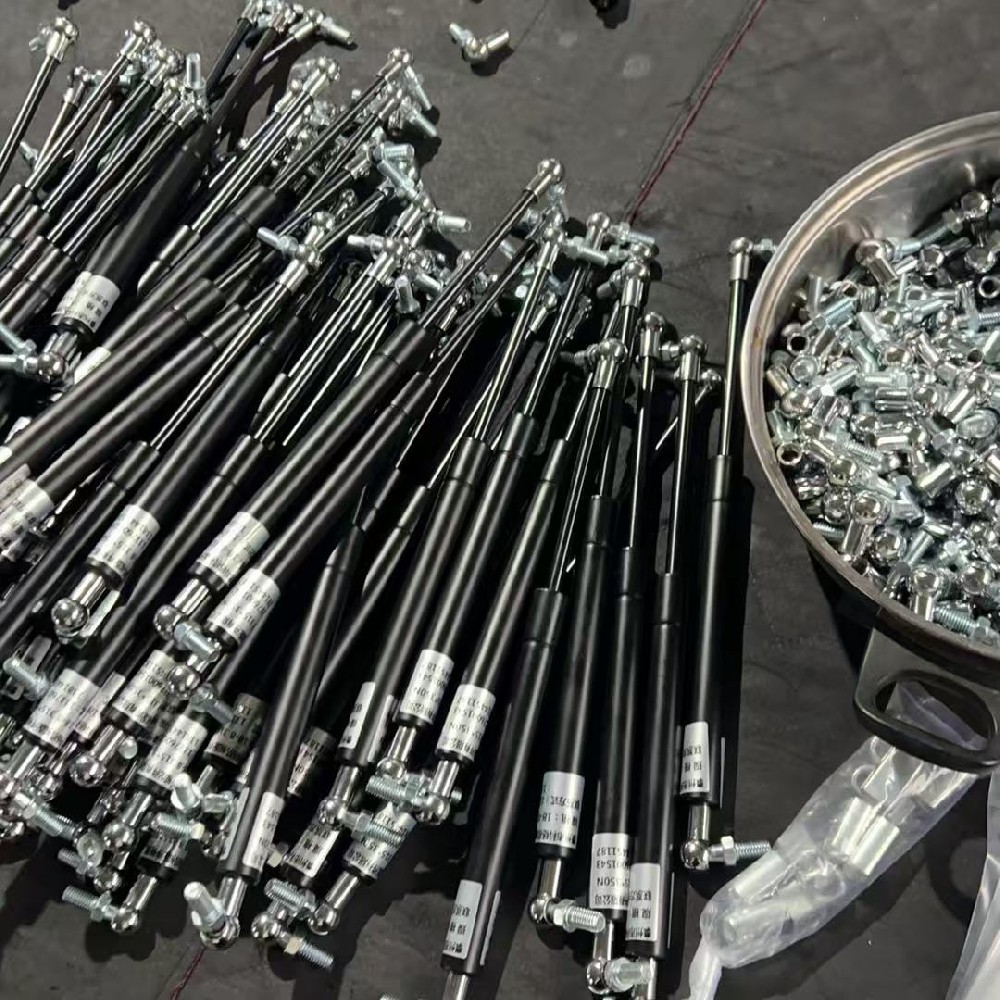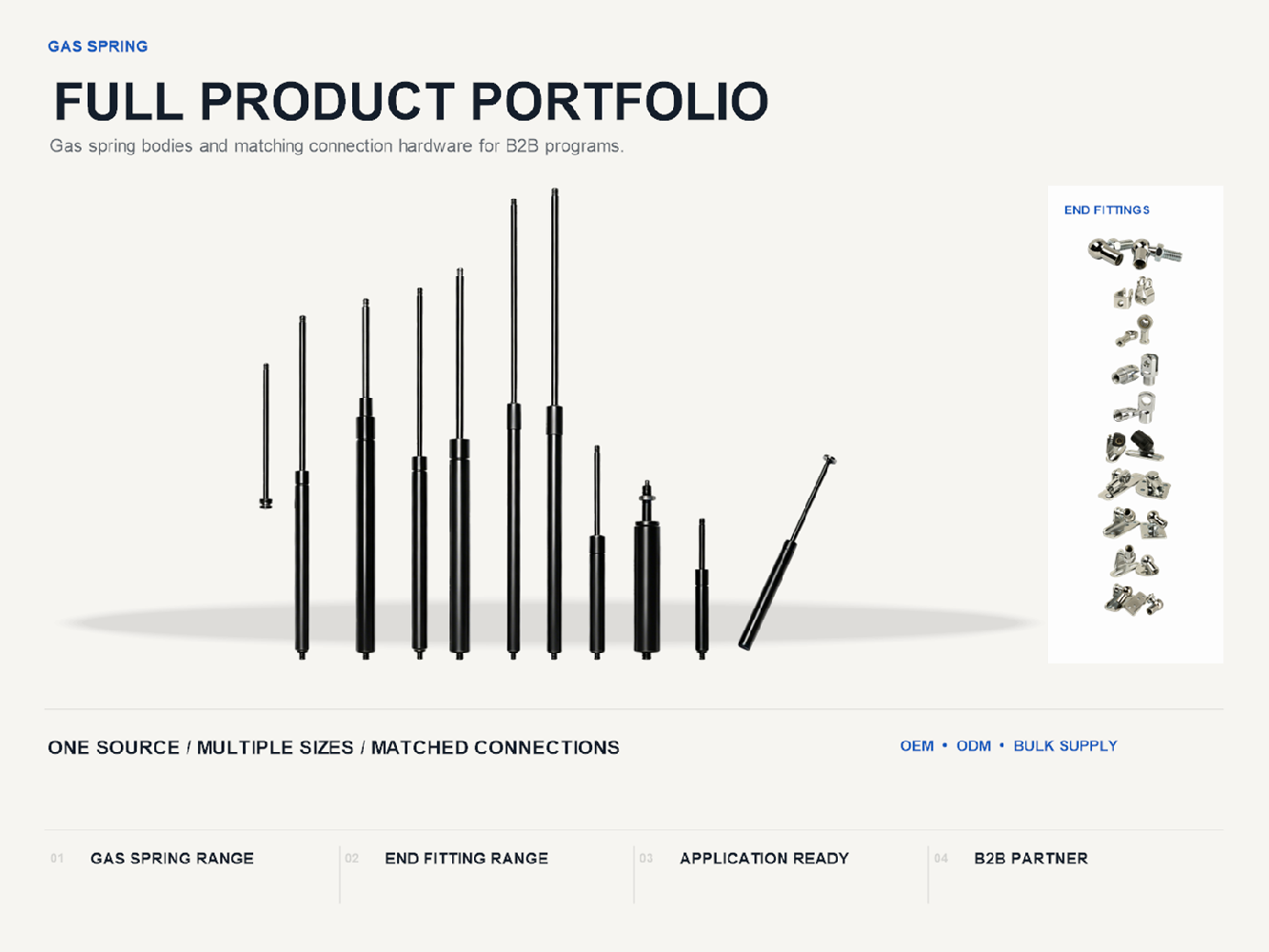
A standard compression gas spring stores energy in compressed nitrogen inside a sealed cylinder. Pushing the piston rod inward reduces the gas volume and raises pressure; the resulting outward force helps lift or counterbalance a load.
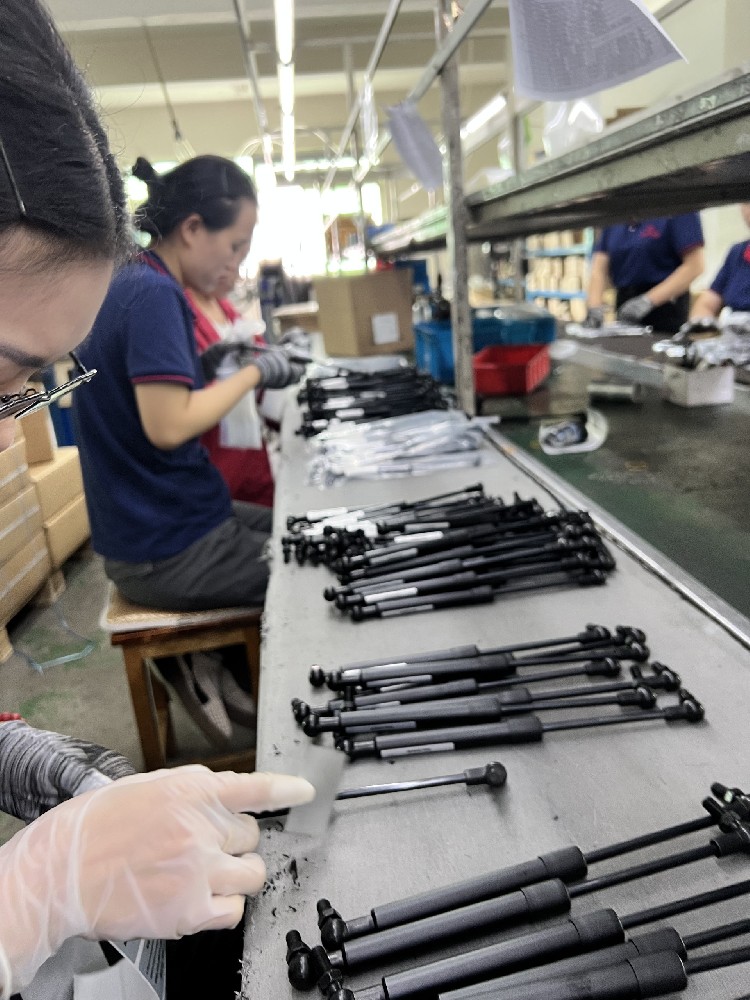
How does a gas spring produce force?
The main components are a pressure cylinder, piston rod, piston and seals. In a conventional non-locking design, gas can pass across the piston. The rod creates unequal effective areas, so pressure produces a net force toward extension.
The static gas contribution is approximately extension force = (internal pressure minus external pressure) multiplied by rod cross-sectional area. Seal friction also affects the measured operating force. As the rod enters the cylinder, gas volume falls and pressure rises, so the force changes over the stroke. See the Industrial Gas Springs operating-principles explanation.
What controls speed and end cushioning?
A force marking in newtons describes force, not travel speed. Internal flow passages and the selected construction influence motion. In applicable designs, oil lubricates internal components and provides cushioning over part of the stroke. Damping behavior depends on the configuration and mounting orientation.
Hydraulic end cushioning, speed control and locking are separate specification questions. For example, Stabilus describes different hydraulic and dynamic damping variants. Confirm the required movement and holding function for the selected product.
What does the mechanism mean for OEM selection?
Start with the job: assist a lid, counterbalance a cover, control movement or hold an adjustable position. A standard compression spring provides an outward push; position locking requires a suitable locking design.
Then describe the installation. Panel weight alone is insufficient: hinge location, center of gravity, mounting points and opening angle determine the turning effect needed. Include available space, operating temperature and cycle frequency. Ask for the force reference position and conditions, then assess a sample in the intended assembly.
Compare a candidate with the compression gas spring range. For a quotation, identify the required lengths, stroke, force and both end connections through Horizon matching and supply.
Common questions
Why will a gas spring not compress by hand?
Its outward force may exceed comfortable hand force. A locking mechanism, incorrect configuration or installation problem may also prevent movement. Hand compression alone cannot establish whether the part meets its specification. Check the product identification and instructions with the supplier; avoid excessive force, drilling, heating or improvised pressure release. Follow the manufacturer's handling precautions.
Is a gas spring the same as a gas shock?
“Gas shock” can be an informal name for a lift support, but a shock absorber or damper primarily resists motion. A gas spring primarily provides spring force. State the required function rather than relying on the name; a product may combine assistance and damping.
Does every gas spring lock?
No. Locking and release behavior depend on the product type. Specify whether position holding is needed and how it should release.
Ask about the complete application
Send Horizon the application, an existing part marking or drawing, photos of both ends and your approximate quantity. Add the required motion and any holding function; unknown details can be clarified through the gas spring inquiry page.
#HorizonGasSpring