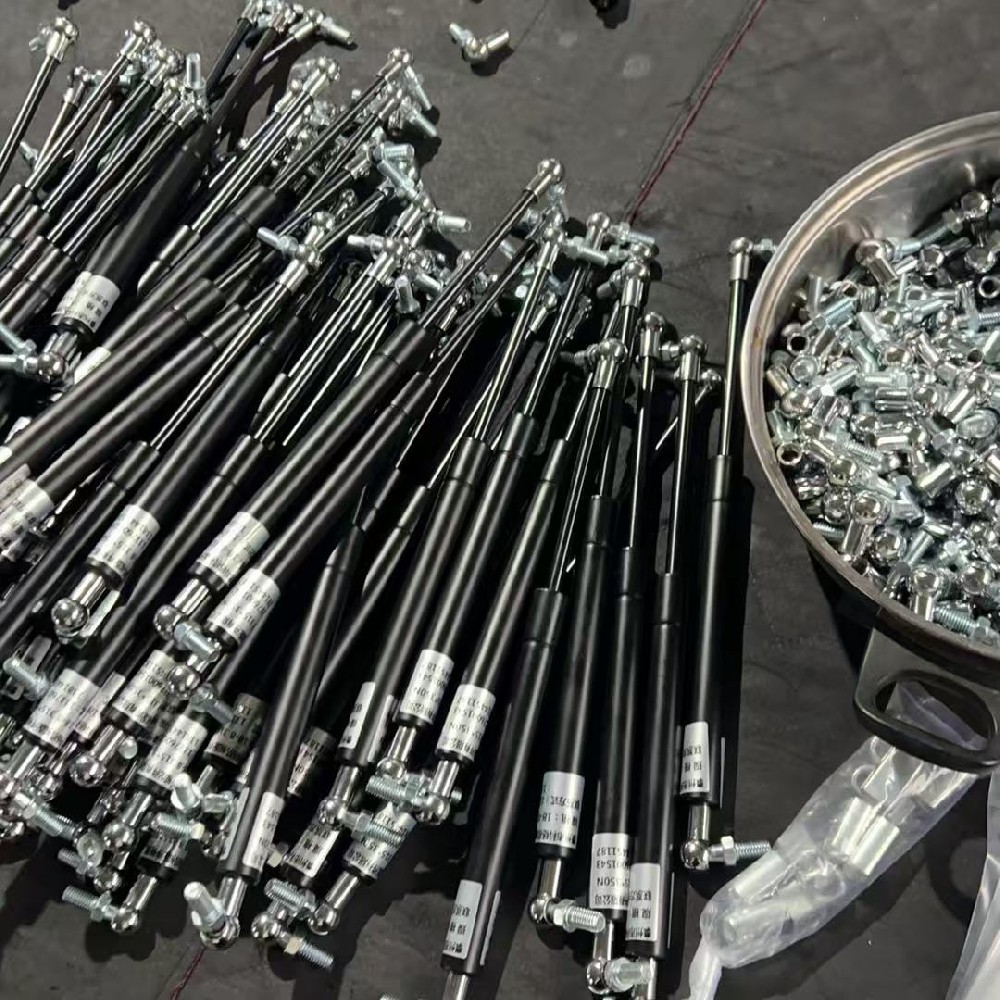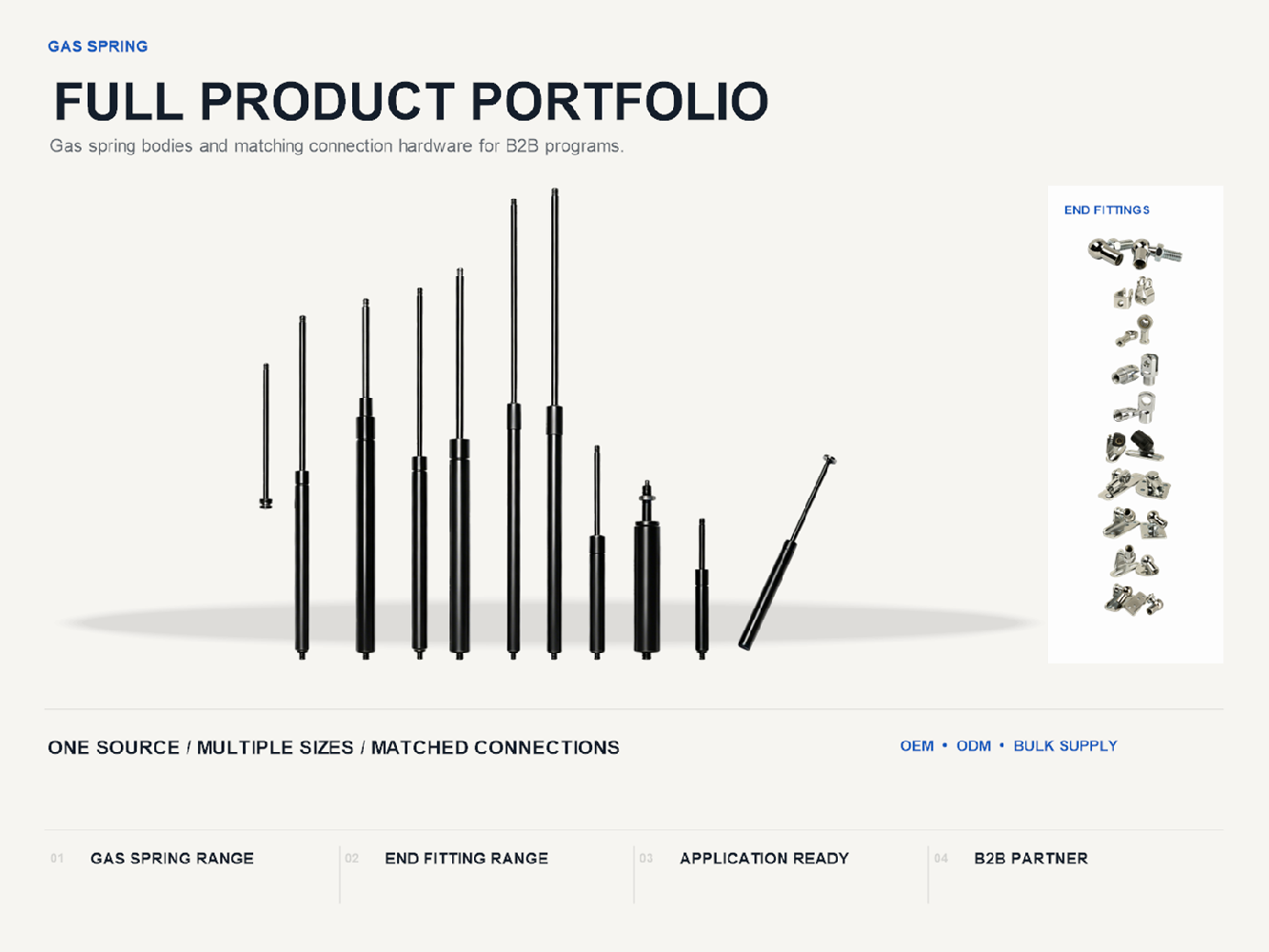
A replacement gas strut can have the expected force rating and still fail to fit the equipment. The mismatch may be in the end fittings: the connection to the strut, the joint that meets the bracket, or the length added by the connector. For OEM service teams and distributors, checking those interfaces before ordering can help avoid a second shipment and workshop rework.
Start with a replacement specification for the complete assembly. A photograph helps identify the general fitting style, but it cannot establish every dimension, material or allowable load.
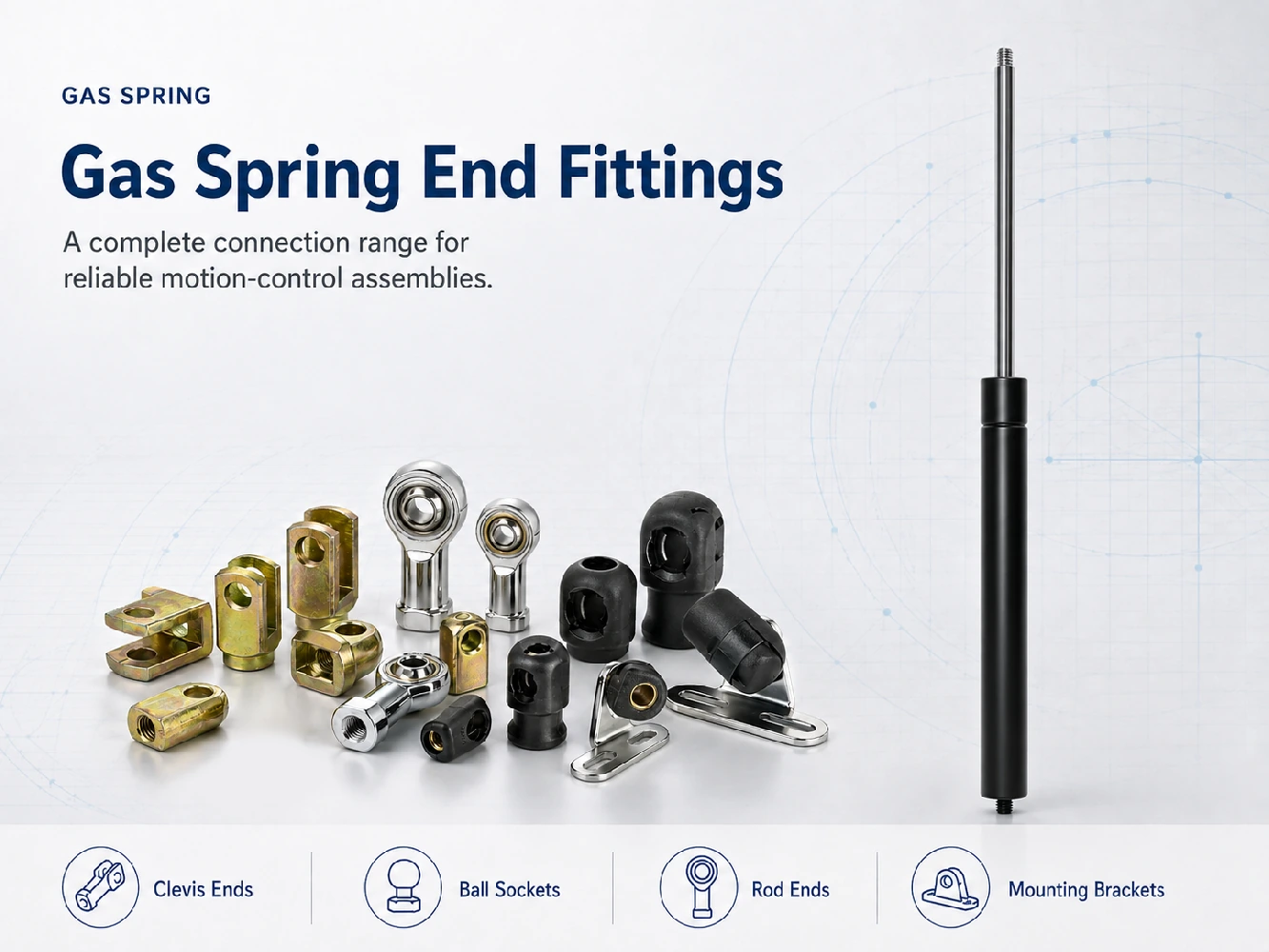
Identify both ends separately
Record the rod-end and cylinder-end connections as separate items. They may use different fitting types or sizes. Also establish whether the replacement should reuse the existing brackets and ball studs or arrive with new matching hardware. An enquiry for “two gas struts” leaves those decisions unresolved.
Match the interface, not just the appearance
Ask for a dimensioned drawing and compare the relevant features:
Threaded connection: thread diameter, pitch, thread form and required engagement.
Ball socket: matching ball-stud size, socket form and retention arrangement.
Clevis or eye: pin or bore diameter, fork opening or eye width, and space for the retaining hardware.
Bracket: mounting-hole pattern, offset and the available installation space.
Compare thread designations, bore dimensions, fitting lengths and widths across connector types. These are separate checks; sharing one dimension does not establish interchangeability.
Specify the assembled length
State where every length is measured. Confirm the extended and compressed lengths between the agreed mounting centres, with the intended end fittings installed. A threaded connector that fits the rod can still change the distance to the mounting pin or ball centre.
Pressed-in and screw-on eyelets can have different dimensions and connector-specific application limits. Ask the supplier to confirm the connector and bracket suitability for the selected gas spring force and service conditions.
Check movement through the full stroke
A connection that fits in one position may restrict movement elsewhere. During sample validation, check that the joints can articulate through the intended opening and closing motion without binding or contacting nearby parts. Follow the equipment manufacturer's procedure and support the moving panel independently while replacing components.
Avoid jamming, bending and lateral loads. Select suitable joints that maintain alignment while allowing the required movement and carrying the load.
Turn the approved sample into a repeatable order
After checking a sample in the intended assembly, record the approved drawing revision and the fittings supplied at each end. List the ball studs, pins, clips, brackets and fasteners that belong in the order. Confirm materials and finishes for the operating environment, and label different configurations clearly so a service team can identify the correct replacement.
Keep this record with the equipment or spare-part reference. It gives purchasing, assembly and after-sales teams the same definition of a complete, compatible item.
Review end fittings and brackets, explore custom gas spring requirements, or send Horizon your drawing, existing-part photos and replacement requirements for a specification discussion.